
Top Trades: October 7 - October 14

Harvey McGuinness • October 16, 2025
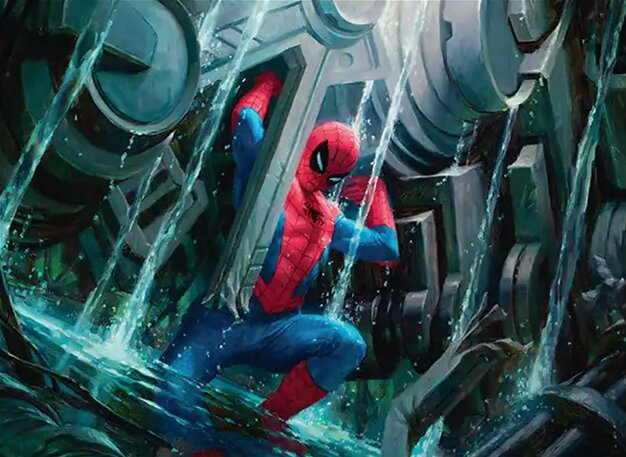
Strength of Will | Illustrated by Ryan Pancoast
Hey, everyone! Happy Thursday, and welcome back to Top Trades, the weekly series where we check in with some of the most popular cards being traded here at Cardsphere over the past week. So, what's been moving? Let's take a look.
Honorable Mention - Goldmire Bridge
Number of Trades: 7 --- Number of Cards Traded: 10
Continuing a trend from last week, this week's honorable mention is Goldmire Bridge, a common from Modern Horizons 2 that's a part of the set's notorious Bridge cycle of dual-color, tapped, artifact lands. Last week, we saw the Dimir contender (Mistvault Bridge). This week, it's Orzhov's turn. So, why all the fuss? Two words: Pauper affinity.
In Pauper, decks are severely limited in how readily they can fix their mana. Unlike in other formats, where rarity isn't an issue, Pauper's limitation to only commons essentially means that any land that can add multiple colors of mana is going to enter tapped. So, with that understanding, Goldmire Bridge's enters-tapped clause isn't so much of a standout; sure, entering tapped isn't great, but it is a much more common thing in Pauper.
Secondly, since Goldmire Bridge is an artifact, controlling it reduces the cost of many of the format's most played spells in the affinity shell. Because of this, Goldmire Bridge only kind of enters tapped in practice, reducing affinity spells by for as long as you control it, only to later also add either or once it has had the opportunity to untap.
#5 - Strength of Will
Number of Trades: 5 --- Number of Cards Traded: 6
First up on our main list for the week is a pretty potent combat trick, and that card is Strength of Will.
For , this instant gives a creature you control indestructible and "Whenever this creature is dealt damage, put that many +1/+1 counters on it," until end of turn.
Right away, the first thing that stands out about Strength of Will is the mana cost. Combat tricks are already pretty low priority in most competitive environments (unless they have particularly impactful synergy or do something pretty busted), and that barrier to entry is even higher when the spell's mana value is two instead of one. Looking to the actual effect of the spell, however, and we can see that this card puts that extra mana to work. Just saving a creature wouldn't be nearly enough on its own, but the ability to suddenly and permanently grow by a significant amount is worthwhile. Is it good enough to make the competitive cut? No, not really, but does it synergize plenty well with a broad array of Commander decks? Absolutely.
#4 - Jackal, Genius Geneticist
Number of Trades: 5 --- Number of Cards Traded: 7
Speaking of green spells that deal with +1/+1 counters, next up is a really fun build-around for Commander that has all the makings of bringing something unique to classic Simic good stuff piles.
For , Jackal, Genius Geneticist is a 1/1 legendary Human Scientist Villain with trample and "Whenever you cast a creature spell with mana value equal to Jackal's power, copy that spell, except the copy isn't legendary. Then, put a +1/+1 counter on Jackal." To start, let's talk about Jackal's one downside (because boy, oh boy, is there a lot of upside).
First, it's important to note that Jackal's trigger is bother incremental and strictly matching. If you cast a one-drop and Jackal has two power, you won't be gaining anything. Similarly, Jackal rewards players for paying attention to the sequencing of their spells. Magic has a near-unlimited amount of powerful one-drop creatures in blue and green, so be careful about which creature you want to use Jackal's trigger on. Remember, there's no "may" condition here: if the creature's mana value matches Jackal's power, then you've gone and used your trigger.
Alrighty, now that we've mapped our conditions, let's look at how to break Jackal. First off, green has access to both the likes of Second Harvest and Hardened Scales, meaning that it is easy to both double the number of tokens Jackal ends up creating as well as readily possible to accelerate how big Jackal gets. Similarly, the likes of Giant Growth are now pseudo-ramp in this deck, as Jackal can spontaneously grow in order to meet the needs for an out-of-sequence creature.
#3 - Mesmeric Fiend
Number of Trades: 6 --- Number of Cards Traded: 17
Alrighty, back to the world of Pauper. Let's talk about Mesmeric Fiend.
For , Mesmeric Fiend is a 1/1 Nightmare Horror that, when it enters, allows you to look at target opponent's hand, pick a nonland card from it, and exile it. Mesmeric Fiend also has the separate triggered ability which returns that card to the opponent's hand when it leaves the battlefield.
Mesmeric Fiend is defined by the fact that the enters trigger and the leaves trigger are separate abilities. Nowadays, they would likely be fused into one ability which exiles the chosen card until Mesmeric Fiend leaves the battlefield. However, since they are separate abilities, it means that, if Mesmeric Fiend leaves the battlefield before the enters trigger can resolve, you'll be able to permanently exile a card from your opponent's hand. How are we going to do that? With the likes of Village Rites, of course!
By combining instant-speed spells that have a sacrifice cost with Mesmeric Fiend, it's pretty easy to have extraordinary value plays where three or so mana is spent to rip a card permanently out of your opponent's hand while also going up value on your own end. In the case of Village Rites, that works out to spending to draw two cards and exile one, plus to gain both an enters trigger and a leaves trigger if you have any other effects which care about those sorts of things.
#2 - Norman Osborn
Number of Trades: 7 --- Number of Cards Traded: 7
And now it's back to Spider-Man, this time with the stand-out cEDH card from the set, Norman Osborn.
Norman Osborn - like many other legendary creatures from the set - debuts a new structural design for dual-faced cards. Here, you can either cast it as the front or back side of the card. Alternatively, if you cast it for the front face, you can also activate its transform ability later on in order to flip Norman Osborn into Green Goblin. Magic hasn't seen this before (the combination of transforming cards with modal dual faced cards), so time will tell as to how broken it really is. My guess? It's pretty good.
Now that we know the structural power-up that Norman is bringing, what about the actual effects of the card? On the front face, Norman Osborn is a legendary 1/1 Human Scientist Villain that can't be blocked, can transform into Green Goblin at sorcery speed for , and has "Whenever Norman Osborn deals combat damage to a player, he connives." (To connive, draw a card and then discard a card. If the discarded card was a nonland card, put a +1/+1 counter on the conniving creature.)
On the backside, we see this card's full potential. As Green Goblin, this is a 3/3 Goblin Human Villain with flying and menace that makes spells you cost from your graveyard cost less to cast. Additionally, Green Goblin grants each card in your graveyard mayhem, with the mayhem cost being that spell's mana cost. (Spells with mayhem can be cast for their mayhem cost from the graveyard on the condition that they were discarded this turn.)
Have you ever heard of Wheel of Fortune? What about Faithless Looting? Both of these cards are in Green Goblin's color identity, both of them serve as a quick way to stock your graveyard, and both are premier options of either card selection or card draw. With Green Goblin out, they also do double duty as massive ramp spells the likes of which few other spells can contend with.
Imagine this: you have a hand full of mana rocks. Talismans, Sol Ring, Grim Monolith, the works. All of these cards immediately have a mana cost of as soon as you can discard them, and a well-tuned Green Goblin deck makes that hurdle incredibly low. Casting spells for free? Pretty good. Casting spells from a graveyard? Also pretty good. With Norman Osborn (as Green Goblin), you can do both while you watch your opponents try to keep up.
#1 - Vault of Whispers
Number of Trades: 8 --- Number of Cards Traded: 11
Last but certainly not least, it's time to go back to the original artifact lands, thanks to our most traded card of the week: Vault of Whispers.
The power behind Vault of Whispers is in how simple the card is. An artifact land that has ": Add ," Vault of Whispers doesn't need any extra frills to boost its potency. Whether that's adding an additional mana thanks to the power of affinity cost reduction or simply turbo charging metal craft, Vault of Whispers does so much more than its subtle design would at first imply. No wonder this card is banned in Modern. Want to know where it isn't banned? Pauper.
Over these past two weeks, members of the Bridge cycle from Modern Horizons 2 have repeatedly populated our list, affirming just how potent the affinity keyword - and its resultant archetype - are in the format. As such, it was just a matter of time before members of the original artifact land cycle, cards which form the ageless core of just about every artifact-matters deck in Pauper, began to show up, too.
Wrap Up
This week essentially boiled down to a split between Marvel's Spider-Man and Pauper. The former gave us a neat combat trick and plenty of exciting cards for Commander, while the latter pointed to some of the main-stays and battle-hardened staples of the format. Check back in next week for another Top Trades, and thanks for reading!

